
The Complete Guide to Private In-Home Dog Training: Why It Works, Why It Matters, and Why It’s the Future of Dog Behavior
In today’s world, dog owners are no longer satisfied with surface-level obedience or temporary fixes. They want real results—calm homes, confident dogs, and a relationship built on trust, communication, and clarity. The question is no longer whether to train your dog—it’s how.
And increasingly, the answer is clear: private in-home dog training is the most effective, efficient, and lasting way to transform your dog’s behavior.
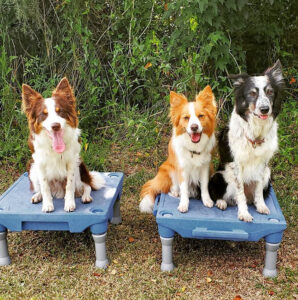
At Ohana Dog Training Center, this philosophy is not theoretical—it’s proven. Through hundreds of real-world cases across Tampa Bay and beyond, one truth continues to emerge: dogs learn best where they live, and owners succeed when they are coached directly inside their own environment.
This article will break down everything you need to know about in-home dog training, why it consistently outperforms traditional methods, and how it creates long-term behavioral change—not just temporary compliance.
Understanding Dog Behavior: It Starts at Home
Dog behavior does not exist in a vacuum. Every action—whether it’s barking, jumping, pulling on the leash, or ignoring commands—is tied directly to the environment in which the dog lives.
Your home is not just where your dog sleeps. It is where:
- Boundaries are either enforced or ignored
- Energy levels are regulated or escalated
- Communication is either clear or confusing
- Habits are formed and reinforced daily
This is why training outside the home often fails to translate into real-life success.
A dog that listens perfectly in a controlled classroom may completely ignore commands in your living room. Why? Because the context is different. The triggers are different. The expectations are different.
Private in-home training eliminates this disconnect by addressing behavior exactly where it happens.
The Fundamental Problem with Traditional Group Classes
Group classes have been the default model for decades. They are marketed as affordable, social, and structured. But beneath the surface, they often fail to deliver meaningful, lasting results.
Here’s why:
1. Lack of Personalization
In a typical group setting, one trainer may be managing 8–12 dogs at once. That means limited attention for each dog, and almost no customization.
Yet no two dogs are alike.
Some are anxious. Some are reactive. Some are overly dominant. Some are simply untrained.
Trying to solve all of these issues with the same curriculum is ineffective.
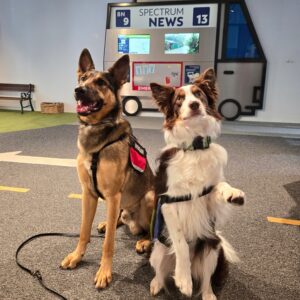
2. Artificial Environment
Dogs behave differently in unfamiliar environments. A training facility is not your home. It lacks:
- Your furniture
- Your family dynamics
- Your daily routines
- Your real-life distractions
So even if your dog performs well in class, that success often doesn’t transfer.
3. Distraction Overload
Other dogs, new smells, unfamiliar people—these elements create a chaotic environment that can overwhelm many dogs.
Instead of learning, the dog is often just coping.
4. Owner Disconnect
Perhaps the biggest issue: group classes often train the dog more than the owner.
But long-term success depends on the human.
At Ohana Dog Training, the philosophy is clear: you are not just training your dog—you are becoming your dog’s leader.
Why Private In-Home Dog Training Works
Private in-home training flips the entire model. Instead of forcing your dog into a generic system, the system is built around your dog, your home, and your life.
1. Real-World Training in Real-Time
Every session takes place in the environment where your dog actually lives. That means:
- Doorbell barking is addressed at your door
- Jumping on guests is addressed when guests arrive
- Leash pulling is corrected on your actual walking route
- Household boundaries are established in real spaces
This creates immediate, practical results.
2. Customized Training Plans
No two dogs receive the same program.
Training is tailored to:
- Age (puppy, adolescent, adult)
- Breed tendencies
- Behavioral challenges (reactivity, anxiety, aggression)
- Household structure
- Owner goals
This level of personalization dramatically accelerates progress.
3. Faster Behavioral Change
Because training is targeted and distraction-free, dogs learn faster.
Instead of spending weeks repeating generic commands, in-home training focuses directly on the behaviors that matter most.
4. Owner Coaching and Empowerment
This is where in-home training truly separates itself.
You are not just observing—you are actively learning.
You are taught:
- How to communicate clearly
- How to reinforce good behavior
- How to correct unwanted behavior
- How to maintain structure long-term
The result? You become confident, consistent, and effective.
The Science Behind Effective Dog Training
Modern dog training is rooted in behavioral science—specifically, the principles of learning theory.
At its core are the four quadrants of learning:
- Positive reinforcement (rewarding desired behavior)
- Negative reinforcement (removing discomfort when behavior improves)
- Positive punishment (adding a consequence to stop behavior)
- Negative punishment (removing a reward to discourage behavior)
Balanced training uses all four appropriately to create clarity and consistency for the dog.
When applied correctly in a structured in-home setting, these principles:
- Reduce confusion
- Accelerate learning
- Build trust
- Create predictable outcomes
The key is timing, consistency, and environment—all of which are optimized in private sessions.
Common Behavioral Issues Solved with In-Home Training
Private in-home training is especially effective for real-world behavioral problems, including:
Barking at the Door
Dogs often perceive doorbells and knocks as threats. In-home training addresses this trigger directly, teaching calm, controlled responses.
Jumping on Guests
This behavior is rooted in excitement and lack of boundaries. Training focuses on impulse control and structured greetings.
Leash Pulling
Rather than practicing in a sterile environment, training occurs on your actual walking routes—where the behavior happens.
Reactivity to Dogs or People
Reactive dogs need controlled exposure and precise timing. In-home training allows for gradual, structured desensitization.
Separation Anxiety
This is one of the most environment-dependent issues—and one of the hardest to fix in a group setting.
Resource Guarding
Food, toys, or space-related aggression requires careful, individualized handling.
These are not surface-level obedience issues. They are behavioral patterns—and they require a targeted approach.
Puppy Training: Building the Foundation Early
One of the biggest advantages of in-home training is early intervention.
Puppies are constantly learning—even when you’re not actively training them.
Without structure, they develop habits like:
- Jumping
- Nipping
- Whining
- Ignoring commands
- Poor potty habits
In-home puppy training focuses on:
- Crate training
- Potty training
- Basic obedience (sit, stay, recall)
- Socialization
- Impulse control
By establishing clear communication early, you prevent problems before they start.
Advanced Training and Real-World Applications
In-home training is not limited to basic obedience.
It extends into advanced areas such as:
- Off-leash control
- Public behavior
- Service dog preparation
- Trick training
- Canine acting and performance work
At Ohana Dog Training Center, dogs have even been trained for film, commercials, and live performance environments—demonstrating the highest level of discipline and focus.
The Role of the Trainer: More Than Instruction
A great dog trainer does not simply give commands—they translate communication between species.
They observe:
- Subtle body language
- Energy shifts
- Timing of behaviors
- Environmental triggers
They then guide the owner to understand and respond appropriately.
This is why experience matters.
With a background in advanced training, competition, and real-world application, trainers at Ohana bring a level of expertise that goes far beyond basic obedience instruction.
The Emotional Impact: More Than Just Behavior
Dog training is not just about commands. It’s about quality of life.
For many families, behavioral issues create stress, frustration, and even conflict.
After effective in-home training, clients often report:
- A calmer household
- Stronger bonds with their dog
- Increased confidence as an owner
- Reduced anxiety—for both dog and human
This transformation is not just functional—it’s emotional.
Cost vs. Value: The Real Investment
At first glance, private training may appear more expensive than group classes.
But this is a classic case of cost vs. value.
Group classes often lead to:
- Incomplete results
- Continued behavioral issues
- Additional training needed later
In contrast, in-home training delivers:
- Faster results
- Permanent behavioral change
- Fewer sessions needed overall
When viewed long-term, it is often the more cost-effective option.
Why Location Matters: Tampa Bay and Beyond
In-home training is especially valuable in diverse environments like Tampa Bay, where dogs may encounter:
- Busy urban settings
- Suburban neighborhoods
- Waterfront distractions
- High foot traffic areas
Training in your specific environment ensures your dog is prepared for your real-world conditions.
Ohana Dog Training Center serves a wide range of areas, bringing personalized training directly to clients—eliminating the need for travel and maximizing convenience.
The Future of Dog Training
The trend is clear.
Dog owners are moving away from:
- Generic programs
- One-size-fits-all classes
- Short-term fixes
And toward:
- Personalized solutions
- Relationship-based training
- Real-world application
Private in-home training is not just an alternative—it is becoming the standard for serious dog owners who want lasting results.
Final Thoughts: Train Smarter, Not Harder
If you are struggling with your dog’s behavior, the solution is not more repetition—it is better strategy.
Train where it matters.
Train with purpose.
Train with clarity.
Private in-home dog training offers a direct path to:
- Faster learning
- Stronger relationships
- Long-term success
At Ohana Dog Training Center, the mission is simple: help dogs and their owners succeed—together.
Because when the training happens at home, the results stay for life.
Call to Action
If you’re ready to transform your dog’s behavior and create a calmer, more connected home environment, now is the time to act.
Private in-home training is not just a service—it’s an investment in your dog, your home, and your peace of mind.
Your dog is capable.
You just need the right system.