Clearer communication
The handler understands how to ask for a behavior, recognize a good response, and practice consistently.
The aim is useful progress in the handler’s daily life. We start by understanding the team, then shape the work into manageable steps.
We discuss the dog’s age, background, behavior, training history, and your practical goals. We also talk about the settings where you hope to work together.
Attention, confidence, responsiveness, and comfort around distractions help guide the next steps. Suitability is considered honestly; progress cannot be assumed.
Tasks are broken down and practiced in achievable stages, with a plan that reflects the handler’s needs and the dog’s learning.
Clear cues, consistent practice, and gradual increases in difficulty help skills carry into everyday situations. Readiness guides the pace.
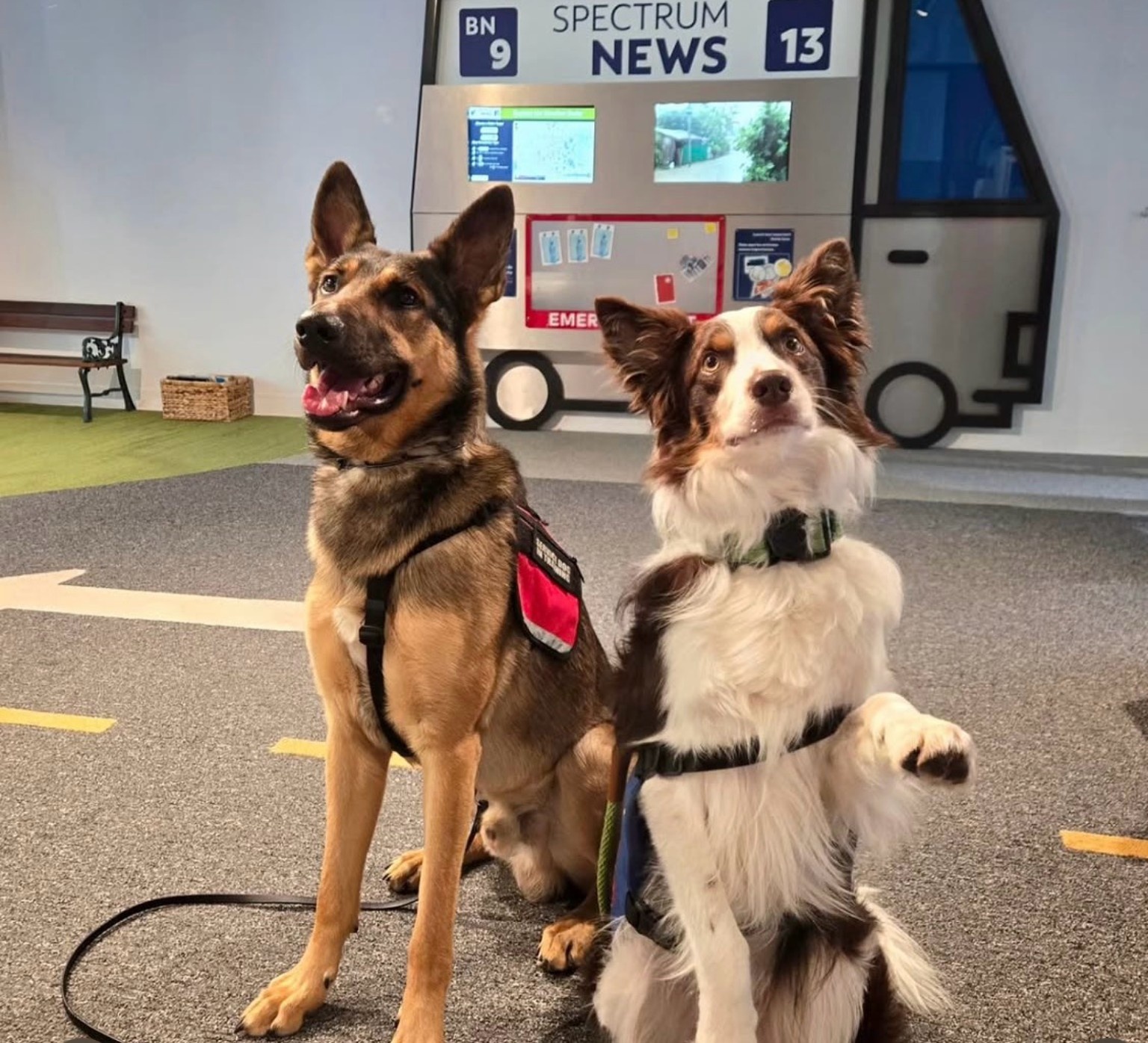
Everyday environments give dogs and handlers opportunities to practice attention, communication, and responding to distractions.
We build on familiar skills and introduce new settings thoughtfully, with the dog’s readiness guiding each step.
Explore service dog training →Your dog’s age, breed or mix, and training background.
The practical assistance you want to discuss, in as much detail as you are comfortable sharing.
Your location, schedule, and the situations your dog finds easy or challenging.
There is no fixed completion date presented here. Scope, timing, fees, and availability are discussed after learning about the individual team.
The handler understands how to ask for a behavior, recognize a good response, and practice consistently.
The dog can build on familiar skills before more difficult environments or distractions are introduced.
Each stage has a practical reason, with room to adjust when a dog needs more time or a different approach.
Tell us about your dog and the partnership you hope to build.
Talk With Cassie